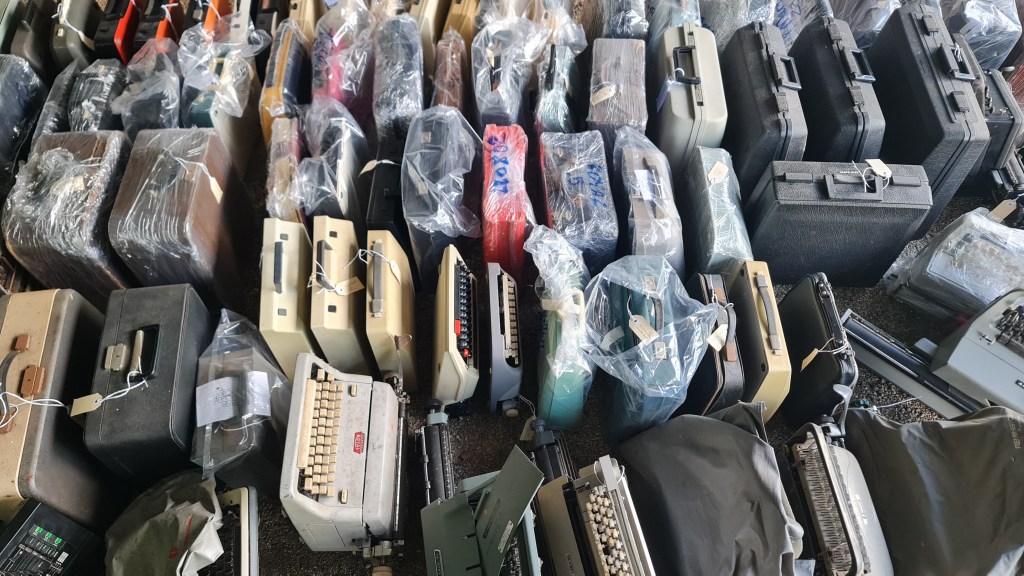
Firstly, a typewriter is a companion, not just a tool
A typewriter is more than a device for typing; it’s a trusted companion that bears witness to your thoughts, creativity, and experiences. Unlike digital devices, typewriters are built to last, transcending generations.
Why Typewriters Endure
- Tactile Connection: Typewriters provide a sensory experience, with tactile feedback from pressing keys and hearing the mechanical sound.
- Physicality: Typewriters occupy space, with a presence that invites interaction.
- Permanence: Typewriters don’t become obsolete; they remain functional, even decades later.
- Character: Each typewriter develops its own personality, with unique quirks and characteristics.
Types of Typewriters
- Mechanical Typewriters (1874-1960s): Early models, like the Sholes & Glidden, featured intricate mechanisms.
- Portable Typewriters (1909-1980s): Compact designs, such as the Underwood No. 5, enabled mobility.
- Electric Typewriters (1920s-1990s): Electric motors assisted typing, exemplified by the IBM Selectric.
- Electronic Typewriters (1970s-1990s): Early electronic models, like the Brother EP-20, introduced memory and display screens.
- Vintage Typewriters (pre-1980s): Collectible machines, often restored and cherished for their aesthetic and historical value.
Eras of Typewriter Design
- Victorian Era (1870s-1900s): Ornate, intricate designs.
- Art Deco (1920s-1940s): Streamlined, geometric shapes.
- Mid-Century Modern (1950s-1960s): Sleek, minimalist designs.
- Space Age (1970s-1980s): Futuristic, ergonomic designs.
Iconic Typewriter Models
- Underwood No. 5 (1900s): Portable, reliable, and iconic.
- IBM Selectric (1961): Electric, ergonomic, and influential.
- Olympia SM9 (1960s): Portable, sleek, and popular among writers.
- Royal Companion (1930s): Compact, portable, and stylish.
 Type n Write - Sunshine Typewriters