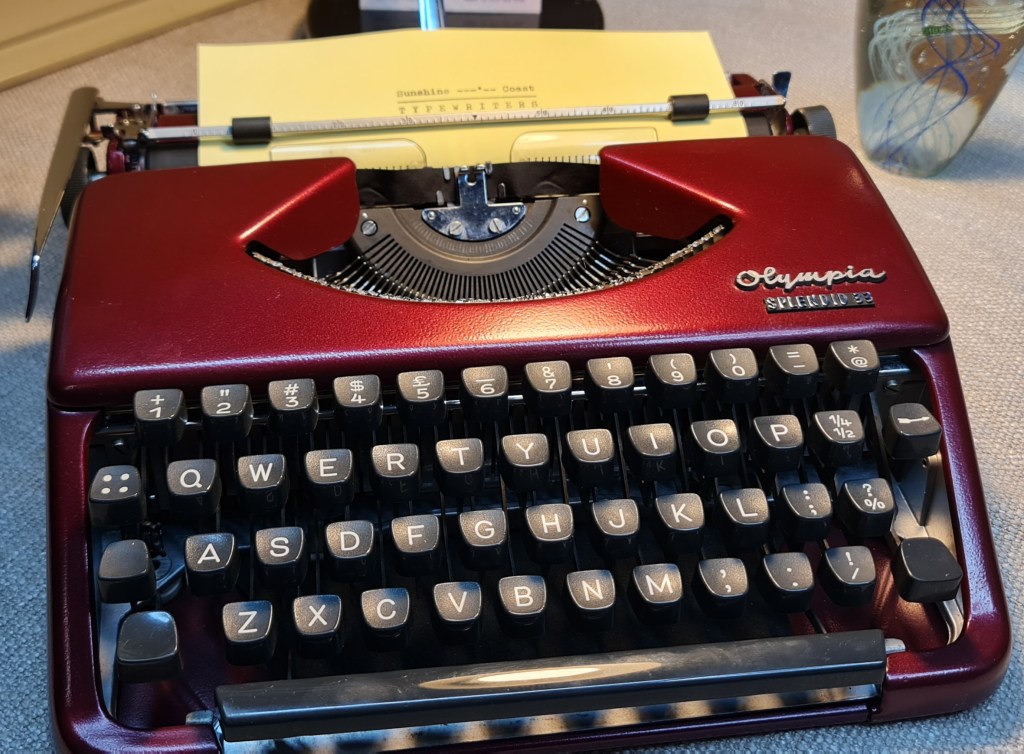
Some regular use of a typewriter
- Writing and journalism: Many authors, journalists, and writers use typewriters for drafting and editing.
- Education: Typewriters are used in some schools for teaching writing, typing, and literacy skills.
- Office work: Some businesses and professionals use typewriters for everyday correspondence and documentation.
- Creative writing: Poets, novelists, and playwrights often use typewriters for their creative work.
- Personal correspondence: Some individuals prefer typewriters for writing letters and postcards.
Unusual use of typewriters
- Art and craft: Typewriters are repurposed as art pieces, sculptures, or functional items like lamps, planters, or jewelry.
- Music and sound art: Typewriters are used as musical instruments, creating percussive sounds or even electronic music.
- Performance art: Typewriters are incorporated into live performances, such as poetry readings or theatrical productions.
- Therapy and accessibility: Typewriters are used in occupational therapy for individuals with motor skill or cognitive challenges.
- Prop rental: Vintage typewriters are rented as props for film, television, and theater productions.
Niche uses
- Cryptography: Typewriters are used for secure communication, encoding messages, and creating ciphers.
- Survivalism: Typewriters are recommended for off-grid communication and record-keeping.
- Historical reenactment: Typewriters are used to recreate historical events or settings.
- Steampunk and cosplay: Typewriters are modified and used as props in steampunk and cosplay communities.
- Scientific research: Typewriters are used in some research studies, such as cognitive psychology or neuroscience experiments.
Innovative uses
- Typewriter-generated art: Artists use typewriters to create intricate designs and patterns.
- Typewriter-based games: Games like “Typewriter” and “Type Rider” utilize typewriters as game controllers.
- Assistive technology: Typewriters are adapted for individuals with disabilities, providing alternative input methods.
- Sound poetry: Typewriters are used to create sound poetry and audio performances.
- Kinetic sculpture: Typewriters are incorporated into kinetic sculptures, exploring movement and mechanics.
 Type n Write - Sunshine Typewriters